TIANJIN, China, November 2026 — Steel pipelines used in water transmission, fire protection, and industrial facilities require different corrosion protection systems. Internal contact with water, underground installation, and exposure to industrial environments create different coating requirements, making coating selection an important part of pipeline specification and procurement.
For engineering contractors, distributors, and industrial buyers, choosing a suitable coated steel pipe involves more than comparing dimensions and prices. Coating structure, application method, substrate condition, and inspection requirements all influence product suitability. Tianjin Juming Steel Pipe Co., Ltd., based in Daqiuzhuang Town, Tianjin, supplies coated and composite steel pipes for water supply, fire protection, and industrial pipeline applications.
How Different Coating Systems Serve Pipeline Applications
Coated steel pipes use different protective structures according to their intended service conditions. Epoxy coatings, plastic linings, and three-layer polyethylene systems are among the options used in water-related and industrial pipeline projects, but their construction and application requirements are not interchangeable.
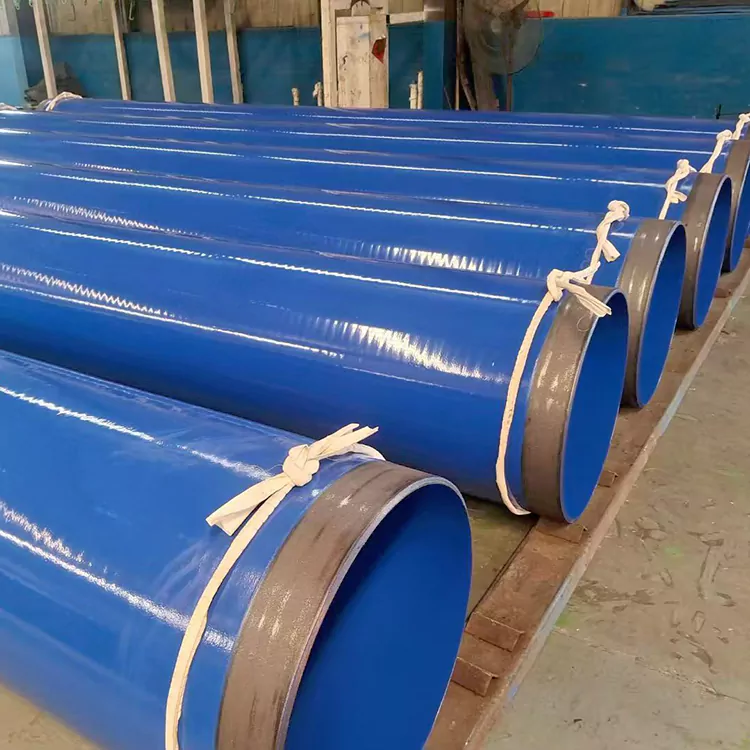
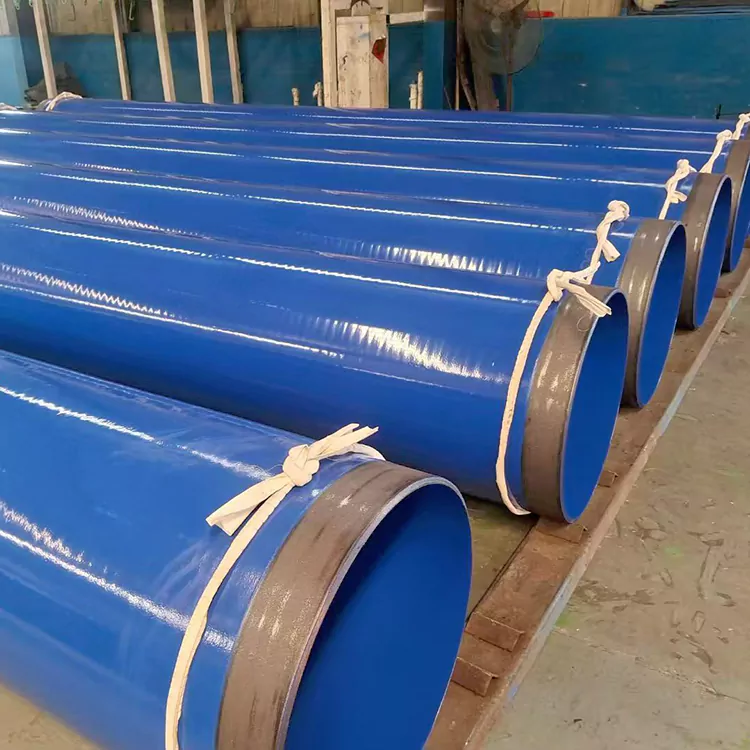
Epoxy-coated steel pipes are commonly specified for fire protection and water-related pipeline systems. The epoxy layer forms a protective barrier over the steel surface, helping reduce direct exposure to moisture and corrosive substances. For fire-fighting installations, buyers should consider coating specifications alongside working pressure, pipe dimensions, connection methods, and installation conditions.
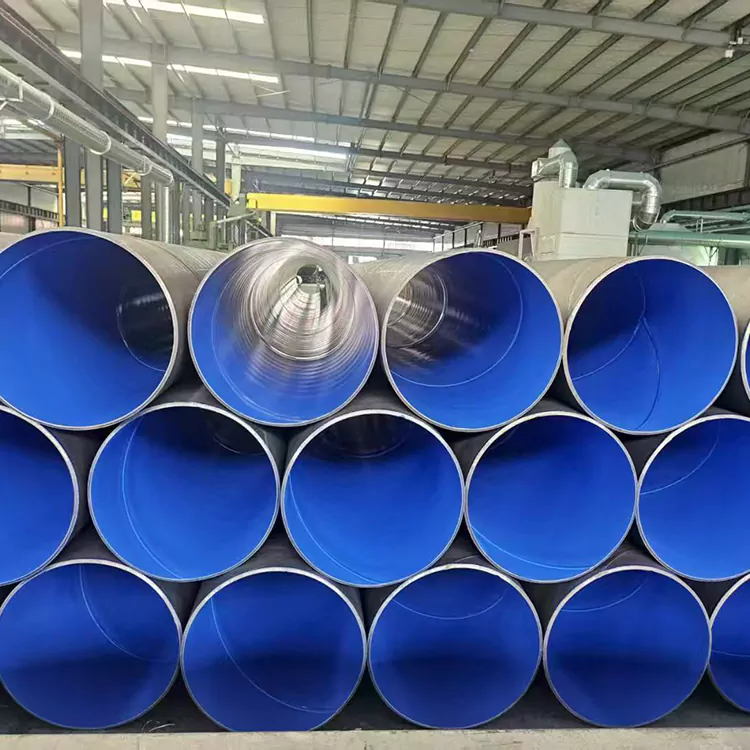
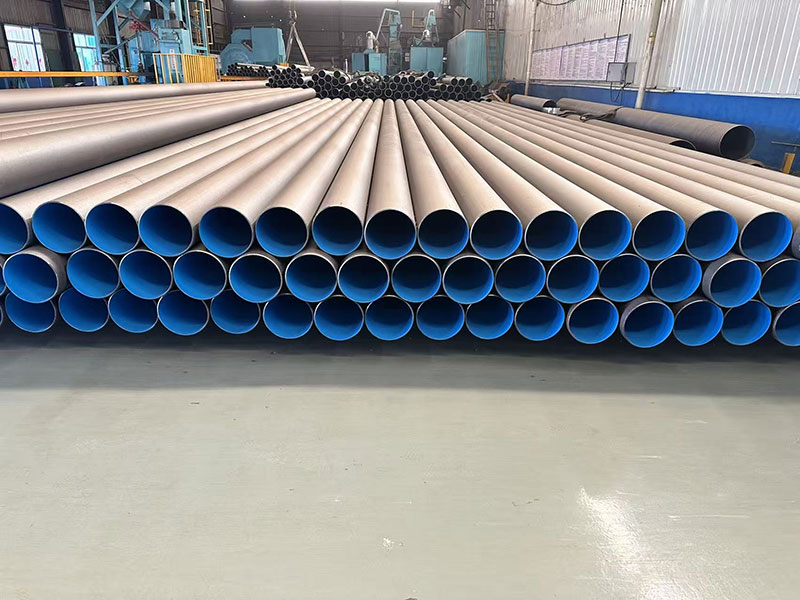
Plastic-lined and plastic-coated composite pipes combine a steel substrate with an internal lining, external coating, or protective polymer layers, depending on the product construction. Internal plastic linings are particularly relevant to fluid transportation, where material compatibility with the transported medium is important. The selected polymer, lining thickness, and connection design should correspond to the intended operating conditions.
3PE anti-corrosion steel pipes feature a three-layer polyethylene coating structure, generally consisting of a fusion-bonded epoxy primer, an adhesive layer, and an outer polyethylene layer. The epoxy primer provides the initial protective layer and bonding surface, the adhesive connects the coating layers, and the polyethylene outer layer provides mechanical protection against external exposure. This structure is widely used for buried steel pipelines requiring external corrosion protection.
These coating systems serve different purposes. Internal lining requirements are primarily associated with the transported medium, while external coating specifications depend heavily on installation and environmental conditions. Identifying the required protection method at the design stage helps avoid mismatches between pipe construction and project operating conditions.
Technical Standards and Inspection in Steel Pipe Procurement
Product standards provide a technical reference for manufacturing, dimensional requirements, and quality evaluation. In China's coated and composite steel pipe sector, relevant standards include CJ/T120-2016 for coated steel pipes, CJ/T136-2007 for plastic-lined steel pipes, and GB/T3091 for welded steel pipes.
These standards cover different aspects of pipe construction and should not be treated as interchangeable certifications. CJ/T120-2016 and CJ/T136-2007 relate to different coated or lined pipe product categories, while GB/T3091 addresses the requirements for welded steel pipe substrates. Additional project-specific requirements may apply to coating materials, application processes, and finished-product performance.
During supplier evaluation, buyers should pay attention to coating thickness, surface condition, adhesion, dimensional tolerances, pressure performance, and inspection documentation. For drinking water applications, the internal lining material must also meet the applicable requirements for contact with potable water.
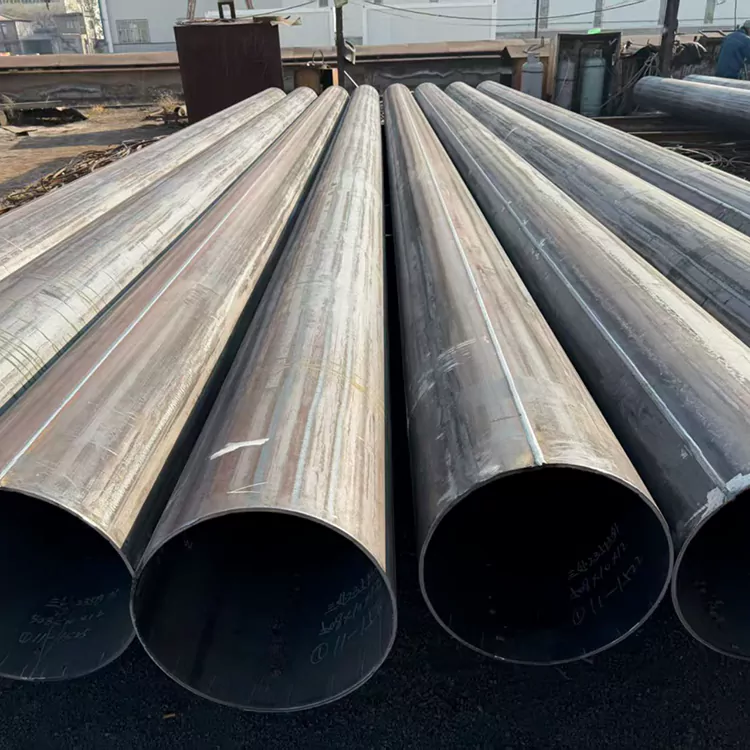
A practical procurement specification should identify the steel pipe grade, outside diameter, wall thickness, coating type, internal or external protection requirements, connection configuration, and applicable testing criteria. These details provide a clearer basis for production, inspection, and acceptance, particularly for orders involving multiple pipe sizes or coating configurations.
Tianjin Juming's Coated Pipe Manufacturing and Product Portfolio
Established in 2015, Tianjin Juming Steel Pipe Co., Ltd. is located in Daqiuzhuang Town, Jinghai District, Tianjin, an established steel production center in northern China.
The company's coated pipe portfolio includes epoxy-coated fire-fighting pipes, steel-plastic composite pipes, internally and externally coated steel pipes, 3PE anti-corrosion steel pipes, large-diameter flange-coated pipes, and internally coated pipes for drinking water applications.
Its manufacturing facilities are equipped with automated internal and external coating equipment, supported by inspection facilities for production quality control. The company works with relevant Chinese product standards, including CJ/T120-2016, CJ/T136-2007, and GB/T3091, according to the corresponding product categories.
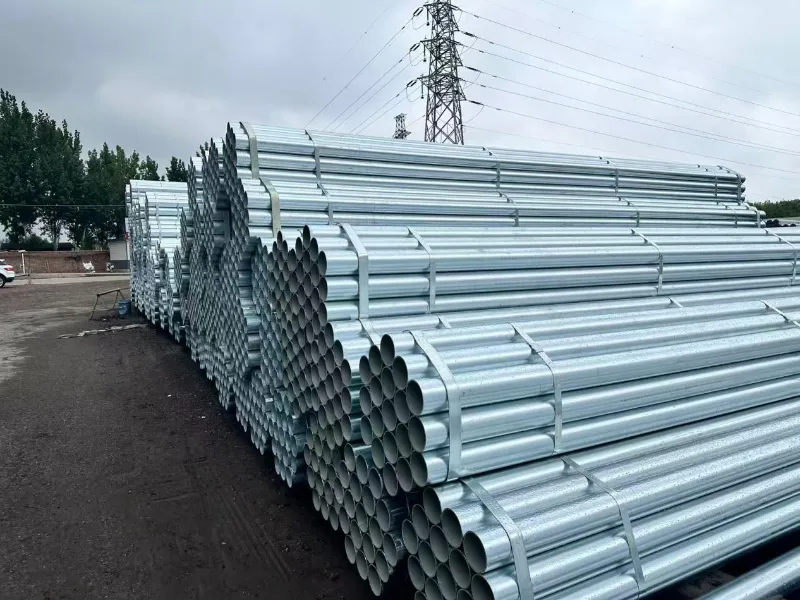
Beyond coated products, Tianjin Juming also supplies galvanized steel pipes, greenhouse pipes, spiral steel pipes, square and rectangular tubes, angle steel, and photovoltaic mounting brackets. These products serve additional requirements in construction, agricultural facilities, infrastructure, and industrial projects.
Production Capacity and International Supply
Tianjin Juming reports an annual production capacity exceeding 45,000 tons. Its manufacturing base in Daqiuzhuang provides access to established steel industry resources, while its proximity to major expressways and Tianjin Port supports domestic transportation and international shipments.
The company's coated-pipe manufacturing operation also provides export support, covering production, processing, customs clearance coordination, and delivery arrangements. This allows overseas buyers to coordinate coated pipe orders and other steel product requirements through the company's supply operation.
For international engineering contractors, distributors, and steel importers, supplier evaluation should consider more than annual production volume. Coating specifications, manufacturing consistency, inspection records, product dimensions, order coordination, and shipping arrangements all influence procurement decisions.
For pipeline procurement, the appropriate coated steel pipe is determined by the relationship between coating structure, transported medium, installation environment, and project specifications. Clearly defined technical requirements allow manufacturers and buyers to align product configuration, inspection procedures, and delivery arrangements before production begins.
Company Information
Tianjin Juming Steel Pipe Co., Ltd.
Address: Daqiuzhuang Town, Jinghai District, Tianjin, China
We use cookies to offer you a better browsing experience, analyze site traffic and personalize content. By using this site, you agree to our use of cookies. Privacy Policy